Dimension 20: Why Every TTRPG Fan Should Be Watching
Dimension 20 is an amazing live play series of Dungeons & Dragons, and honestly, it might be the best one out there. From their cast to their crew, everything they produce is top-tier from start to finish. In just over six years, they’ve grown rapidly, producing 25 seasons and even performing a live show at Madison Square Garden—a historic first for TTRPGs.
Unlike many actual-play series that fade or loose traction, Dimension 20 continues to grow, create, and innovate. Whether it’s launching new story arcs, revisiting fan-favorite characters, or delivering emotional and hilarious moments in equal measure, this show raises the bar again and again.
If you’re into storytelling, roleplay, or just watching talented people bring a fantasy world to life, you should absolutely be watching Dimension 20.
Table of Contents

Spotlight: Brennan Lee Mulligan
Let’s start with the Dungeon Master himself—Brennan Lee Mulligan. Simply put, he’s the most amazing DM I’ve ever seen.
Brennan is endlessly creative, coming up with complex plots, unforgettable villains, and story arcs that evolve naturally with the players’ choices. His ability to balance lore, improv, humor, and emotional storytelling is unmatched. Whether he’s building a world from scratch or bringing depth to a returning one, Brennan crafts every moment with intention.
He doesn’t just run the game—he performs it, and he invites his players to co-create something special in every session. Which is what TTRPGs are all about!
Learning from Brennan Lee Mulligan
By watching Brennan, you learn the right kind of questions to ask your players—questions that draw them deeper into the story and keep them fully engaged. He doesn’t just narrate; he invites. He uses moments of character introspection, narrative decision-making, and in-world consequences to guide players without railroading them. It’s a masterclass in collaborative storytelling.
The way Brennan uses distinct voices and personality quirks for his NPCs and villains adds an unforgettable layer to the experience. These characters stick with you—and with the players. Whether it’s a ridiculous accent or a villain with unexpected depth, the cast remembers them and wants to keep coming back. That kind of investment only happens when a DM brings their world to life.
The world-building he does around the performers is immersive and responsive. He doesn’t drop players into a generic world—they live in it, shape it, and face the consequences of their actions. It’s clear why the cast enjoys it so much: the game becomes a reflection of their choices, their histories, and their emotional arcs.
Watching Dimension 20 feels less like a movie and more like a theatrical cut-scene from a story-rich video game—but with real-time decisions and outcomes. Then there are the combat encounters: they’re dynamic, unexpected, and often go in directions no one (not even Brennan) could have predicted. Like the adorable corn cuties! That unpredictability, grounded in strong character and story foundations, makes the show absolutely electric to watch.
Guest DM: Aabria Iyengar
While Brennan is the primary DM for Dimension 20, the show also features guest Dungeon Masters, including Aabria Iyengar. Aabria brings her own unique style to the table, offering a softer, more nuanced approach compared to Brennan’s intense energy. Her storytelling is rich and immersive, focusing on character-driven narratives that resonate deeply with both players and viewers.
Aabria has served as the DM for several Dimension 20 campaigns, such as Misfits and Magic and A Court of Fey & Flowers, allowing Brennan to step into the role of a player. This shift provides audiences with the opportunity to see Brennan as a character within the story and learn from him as a player as well.
The Players of Dimension 20
One of the things that makes Dimension 20 so incredible is its players. Most of them come from an improv background, which really shows in how they play. Because of that training, they have a strong sense of the classic “yes, and…” principle—which means they’re not only willing to go with the flow of the story, but they actively build on it.
What stands out most is how well they stay in character. Even when a choice might not be what they personally want to do, they make the decision that feels true to the character they’ve built. That kind of commitment makes the narrative so much stronger, and it keeps viewers emotionally invested.
On top of that, they’re funny, intelligent, and wildly creative in how they approach the game mechanics. They think outside the box—like casting Hold Person on someone mid-jump so they fall, or using spells and actions in completely unexpected ways. They treat D&D not like a rules-heavy system, but like a sandbox full of potential. And as a group, across every season, the casts are dynamic, collaborative, and just really fun to watch.

Emily Axford & Brian Murphy
Emily Axford and Brian Murphy are the reason I started watching Dimension 20. I found them first through their podcast, Not Another D&D Podcast (NADDPod). Murph is a great DM on NADDPod, and Emily? She’s just hilarious. Her choices are wild and unpredictable in the best way—and that same chaotic brilliance comes through in Dimension 20.
To be honest, Emily Axford is probably my favorite player on the whole show. She constantly surprises you. She’ll make a random decision halfway through an episode and just commit to it 100%. It’s that fearless energy that makes her so compelling to watch.
Brian Murphy, meanwhile, often seems like the steady hand in the group. He’s the one who helps keep the players on track when things start to spiral—but not in a controlling way. He’s still incredibly funny, and he comes up with some of the most clever uses of spells and gadgets I’ve seen. It’s that inventive thinking that makes you step back and go, “Wow, I never would’ve thought of that.”
Together, Emily and Murph bring a perfect balance of chaos and control to every campaign they’re in.
Zac Oyama
Zac Oyama started out seeming kind of soft-spoken and low-key, and honestly, that’s what made him stand out right away. There’s something really genuine and grounded about the way he plays. But over time, he’s really grown as a player—he’s gotten more vocal, more confident, and just fully embraced the storytelling in such a strong way.
What’s been especially cool to see is Zac branching out. He’s guest-starred on other D&D podcasts, and in one of them, he played a character that was totally unexpected—sassy, tough, and hilarious. It was nothing like what I was used to from him, and I loved seeing that side of him. He brought so much energy to that character, and it really showed how much range he has as a performer.
Even though he’s played other strong characters in different Dimension 20 campaigns—including some that are a bit more assertive or complex—Gorgug from Fantasy High is still the first one that comes to mind when I think of Zac Oyama. There’s just something iconic about that gentle half-orc teen trying to figure himself out. It’s a perfect example of how Zac can take a quieter character and still make them unforgettable.
Ally Beardsley
Ally Beardsley has really transformed over the course of Dimension 20. When they first started, you could tell D&D was totally new for them—there was this shy, uncertain energy like, “Wait, how do I do this?” And it was kind of refreshing, honestly.
I don’t always connect with Ally’s characters as much as I do with some of the others. Their choices often feel more random or out there—which isn’t a bad thing at all, it’s just different. Like, I could totally see myself as Fig, but never as Kristen—well, maybe Kristen from season two or three, but definitely not season one Kristen.
That said, I love that Ally’s characters grow and change so much. They seem to roll nat 20s at just the right—or most chaotic—moments, and it always makes you laugh, especially when it completely derails Brennan’s plans. Watching a DM’s carefully laid setup get upended by a lucky roll and a wild idea is pure joy. As a DM, it can be frustrating—but that’s the magic of storytelling in D&D.
Lou Wilson
When I first started watching the show, I didn’t really connect with some of Lou Wilson’s characters. At first, they felt kind of like the usual characters you’d expect—the type a lot of guys make when they’re new to D&D. They did what you’d expect early on, without many surprises.
But over time, that totally changed. Lou’s characters have grown in ways I didn’t see coming. They’ve had real emotional arcs, and some genuinely heartfelt moments that surprised me. One thing I really like is how polite and respectful he is to the women around him—something that can be rare in both games and media. He’s helpful when friends need him, but still stays true to his character’s personality, even if that means he has to be nudged into growth sometimes. Watching his evolution as a player has made me appreciate his style more and more, and it’s been really fun to see that development happen over the years.

Siobhan Thompson
Siobhan Thompson is another standout player in Dimension 20. The first time I saw her, she was playing Adaine in Fantasy High, and I completely bought it—I genuinely thought that was just who she was in real life. Adaine is this brilliant, intense, bookish character, super focused on growing her intelligence and staying grounded in logic. But then I saw more of Siobhan outside of that role, and she’s actually really laid-back, kind of sassy, and just a lot of fun.
That contrast is what makes her such an incredible performer. Her acting skills are phenomenal, because she doesn’t just play her characters—she becomes them. And even when a character seems totally different from her own personality, she makes it work. She gets fully invested in their emotional arcs and growth, and it shows in every scene she’s in.
What also makes Siobhan great is her sense of confidence and boundaries. She knows exactly when to stand her ground and say, “Screw you,”—and honestly, that’s something every woman should have in her toolkit.
Another thing I really love—especially from the very start of Fantasy High—is that Siobhan brought mental health into the story. Adaine’s anxiety wasn’t treated as a joke or a side note. It was real, and it mattered. That’s not something you see talked about in games like this very often. The way she portrayed it, and how Adaine slowly learned to manage and grow through it, was just beautiful. Sometimes people just need to see that kind of growth to believe it’s possible for themselves. It really meant something.
Why Watching the Players Helps You Learn
One of the best parts of Dimension 20 is just watching the players. Especially for beginners, this show is basically a masterclass in how to play D&D—without it ever feeling like a lesson. If you start with the earlier episodes, they really help show how the game works. You learn the basics just by seeing it in action. But beyond that, the players show you what growth looks like. You see how characters can change over time, and how players figure out new, creative ways to use their spells, skills, and actions—some of them things I would have never thought of on my own.
They show you that it’s okay to mess up. Sometimes you forget a rule or make a choice that doesn’t work—and that’s fine. They usually just turn it into something hilarious and keep the story moving. And sometimes those mess-ups become a permanent part of the campaign’s story, which somehow makes it even better.
Their improv backgrounds also make a huge difference. They know how to say “yes, and” to keep things flowing. They stay in character, make meaningful decisions, and respond in ways that feel honest to the story—even if it’s not what they personally want. They’re great examples of what roleplaying looks like when done really well. If you’re new to D&D and feeling unsure of what to do, this is the group to watch. You’ll learn a lot just by enjoying the show.
The Crew Behind the Magic
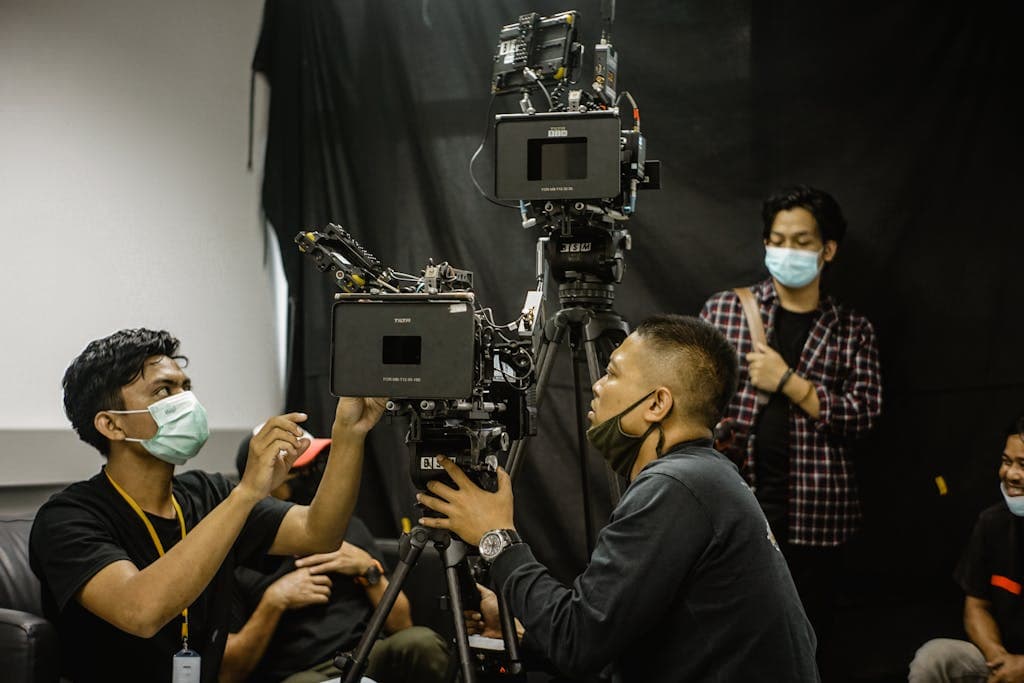
It’s easy to focus on the players and the story when you watch Dimension 20, but the truth is, none of it would be possible without the incredible crew behind the scenes. These people don’t always get the recognition they deserve, but they are just as essential as the folks in front of the camera. From filming and lighting to editing, marketing, and scheduling—this show is a massive effort, and it runs because of the hard work of a dynamic, talented, and passionate team.
And let’s talk about their boss—Sam Reich. He runs Dropout, the platform that produces Dimension 20, and he’s known for doing something incredibly simple but rare: he says hi to every single person who works there. Every day. That kind of intentional kindness matters. He also carries around a little Preston the Peppermint Pig from A Crown of Candy—which is not only adorable but shows how deeply connected he is to the work and the people behind it.
Many crew members actually started out as fans of the show. They loved it so much they found ways to contribute, and now they’re part of the Dimension 20 family. That kind of full-circle journey adds something really special to the energy of the production—it’s not just a job, it’s something they care deeply about.
And then there are the artists
The art in Dimension 20 is absolutely stunning. From the character portraits to the dome’s moving backgrounds in recent seasons, it’s become more immersive than ever. Watching the show feels theatrical and alive, like you’re stepping into a living fantasy novel. The characters look exactly like you imagined based on their descriptions—Fig, for example, was spot on. And the way the art flows and has motion, even when still? That’s a special kind of talent.
And the minis? Incredible. The detail, the color, the personality—all packed onto these tiny figures. They don’t just sit there; they feel alive. They match the character art and help bring the players’ vision to life.
But the sets. Oh, the sets.
Those 3D maps, the tiny towns, rolling hills, battlefields, and buildings—each one crafted with such creativity and love. They aren’t static. Things move. Pieces come apart. Surprise elements are built in. Without giving away spoilers, the last few episodes of Junior Year feature some of the most jaw-dropping set pieces I’ve ever seen. I don’t know how they did it, but it was mind-blowing. It’s like watching your imagination become real—or like seeing your favorite video game get brought to life in 3D, right on your screen.
The creativity, care, and effort the crew brings to Dimension 20 elevates the whole show. They deserve applause, recognition, and so much more. Because while the players and the DM drive the story, it’s the crew that brings the world to life.

Go On Now. Watch.
One of the best parts of Dimension 20 is that it teaches you how to role play—without it ever feeling like a lesson. When you watch the earlier seasons, you learn the basics. You hear the talk about dice, skills, actions. You watch how characters are built, how choices are made, how the game unfolds. And then, as the show goes on, you grow with the players. You see them make bold choices. You see them mess up, turn it into a joke, and carry on. You learn that it’s okay to fail, because sometimes failure leads to the best storytelling moments of all.
The players are dynamic. They commit. They say yes and. They embody their characters, and they show you how to do the same. The show reminds you that you don’t need to separate yourself from your character—you are your character. Your responses shouldn’t feel scripted. They should feel instinctual. Real. Because you’re living the story in that moment.
And that’s what Dimension 20 does best. It lives the story. It helps you see what’s possible. It inspires you to imagine more, to play better, and to fall in love with TTRPGs all over again.
So go on, Watch!

Join my email list!